Implementing QASE Test Management Tool
Date: 04-11-2024
| Original Proposer | Jeffry Luna | July 20, 2023 |
|---|---|---|
| Revision Proposer |
| Advice Stakeholders (AS) | Consent Stakeholders (CS) |
|---|---|
| Jeremy ParkerLuke FlodenJason BlockRobin Neri | François Huet |
| Asynch DeadlinesSummit review comments by | Meeting Date/TimeCS attendence requested | |
|---|---|---|
| Discovery | ||
| Debate | ||
| Decision |
Product link: https://qase.io/
Problem statement
In today’s fast-paced software development environment, effective management of testing processes is critical to ensure the quality and reliability of our products. To streamline our testing efforts and enhance collaboration among our team members, I’d like to spearhead the implementation of QASE, a modern and comprehensive test management tool.
Goals
The primary objective of this proposal is to implement QASE as our test management tool to improve the efficiency, organization, and effectiveness of our testing processes. By leveraging QASE, we aim to achieve the following goals:
-
Centralized Test Management: Consolidate all test-related activities, including test case creation, execution, and reporting, in a centralized platform.
-
Improved Collaboration: Facilitate seamless collaboration among testers, developers, and other stakeholders by providing real-time access to test artifacts and progress.
-
Enhanced Visibility: Gain better visibility into the testing progress, status, and results through intuitive dashboards and reporting features offered by QASE.
-
Increased Efficiency: Streamline testing workflows and reduce manual effort through automation capabilities and integrations with other development tools. ie Focus on just running the test vs figuring out what to test.
-
Lessen Time in On-boarding in terms of Product Knowledge: We can use it as an on-boarding training tool for a test run to be done by a new comer so they can have exposure to a variety of workflows that would otherwise just be known by the product team.
Context and Background
What information do stakeholders need to know to meaningfully participate?
Why QASE
QASE is a modern and user-friendly test management tool, in a current project I’m working on the QA team on the other department has this fully fledged out and working for them, I on the other hand has a basic tool called “Testlodge” that is really limited to being a repository of Manual test scripts. I have been wanting to implement this to the product I’m supporting and hit the ground running with its quirks, but there hasn’t been any opportunity until now. What would QASE provide us?:
-
Test Case Management: Create, organize, and manage test cases efficiently within a hierarchical structure.
-
Test Execution: Execute test cases, record test results, and track progress in real-time.
-
Defect Tracking: Capture, prioritize, and manage defects identified during testing, ensuring timely resolution.
-
Reporting and Analytics: Generate comprehensive reports and gain valuable insights into testing progress, coverage, and quality metrics.
-
Integration Capabilities: Seamlessly integrate QASE with popular development and collaboration tools such as JIRA, Slack, and GitHub (I don’t see Zenhub in there) for enhanced productivity.
-
Test automation: QASE - can integrate into a variety of test automation frameworks- which will be handy in the medium - long term.
How does it look like?
Budget and Resources
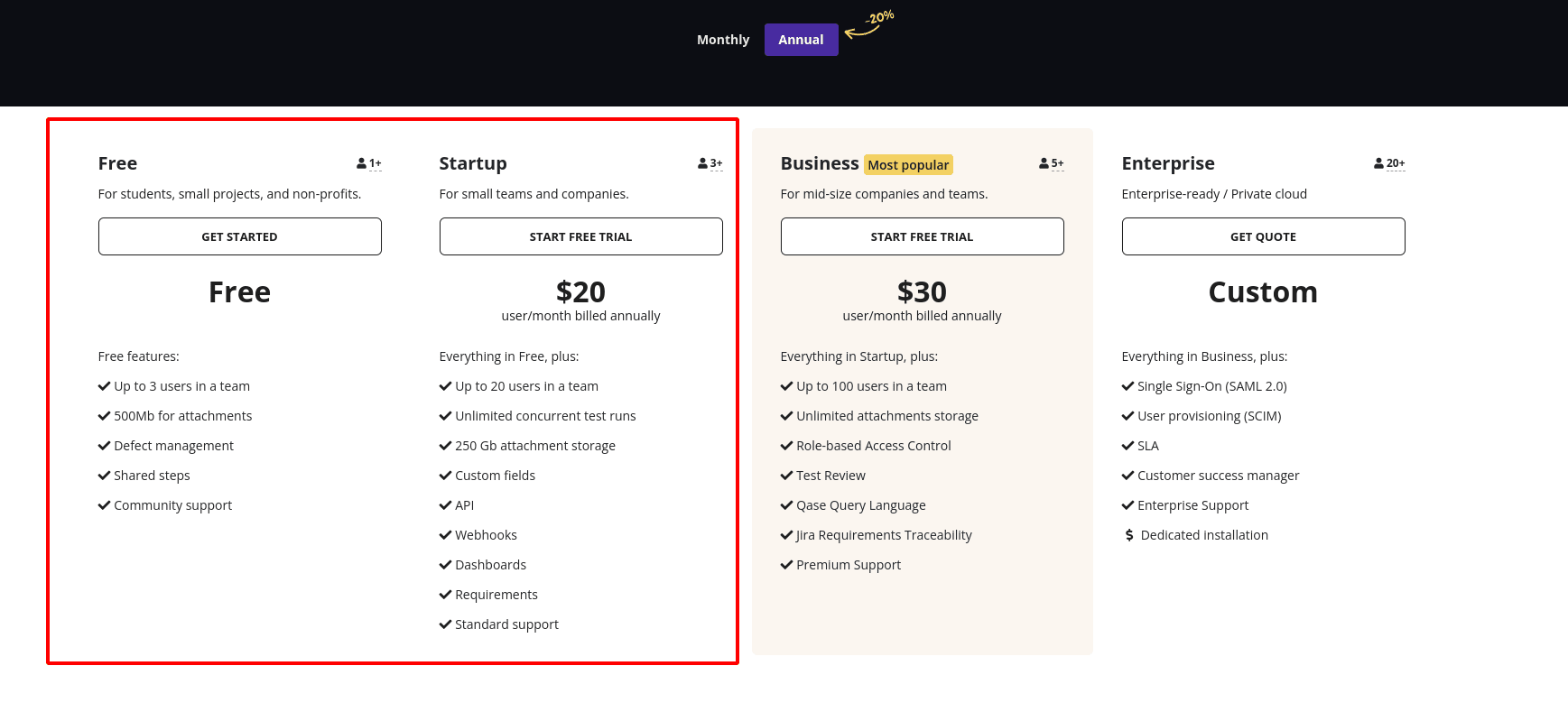
It’s free- 3 licenses on basic storage of test suites and test cases for manual testing.
I am going to dabble on the paid features as I wrap up making the repository for regression testing and UAT first.-
For reference here’s what the paid tier offers:
Proposal (Implementation Plan)
-
Assessment and Planning: There are 3 free licenses that I can take advantage of before we start paying for the good features. I’ve been trying to use it for personal projects and it’s been good so far.
-
Configuration and Customization: Jeff to own transposing of any existing test cases that should be ran on a regular basis and break it down into suites so we have a more organized and modern way of tracking test progress
-
Training and Onboarding: I will try to do a demo for everyone who would be involved in evaluating, engineering output and usability, but the tool in itself is straightforward so it’s not going to be difficult.
-
Pilot Testing: Jeff to create a UAT suite that will hit core features that we care about and get it to run on a weekly basis before we do the deploy
-
Deployment and Rollout: Deploy QASE across the organization gradually, ensuring proper integration with existing workflows and tools. (but right now it’s just to really house a regression suite, UAT suite, and per flow suite.)
-
Monitoring and Evaluation: Monitor the usage and adoption of QASE continuously, gathering feedback from users and stakeholders. Evaluate the impact of QASE on testing efficiency, quality, and collaboration regularly.
Conclusion
Implementing QASE as our test management tool presents an opportunity to enhance the effectiveness and efficiency of our testing processes. By centralizing test management, improving collaboration, and gaining better visibility into testing activities, we can ensure the delivery of high-quality software products that meet the needs of our customers. We recommend proceeding with the implementation of QASE and look forward to the positive impact it will have on our organization.
Post-Ratification Notes & Lessons Learned
| Experiment Start Date | |
|---|---|
| Progress Evaluation Date | |
| Experiment End Date (if any) |